Why I Migrated My Website From WordPress to Next.js
After years of using WordPress, plugin maintenance, spam, and performance challenges pushed me to rebuild my website with Next.js. Here's what I learned.
Why I Migrated My Website From WordPress to Next.js
For years I used WordPress as the foundation of my website.
It helped me launch quickly, publish content, and manage pages without writing much code. However, as the website grew, maintenance became increasingly time-consuming.
The Problem With Plugin Dependency
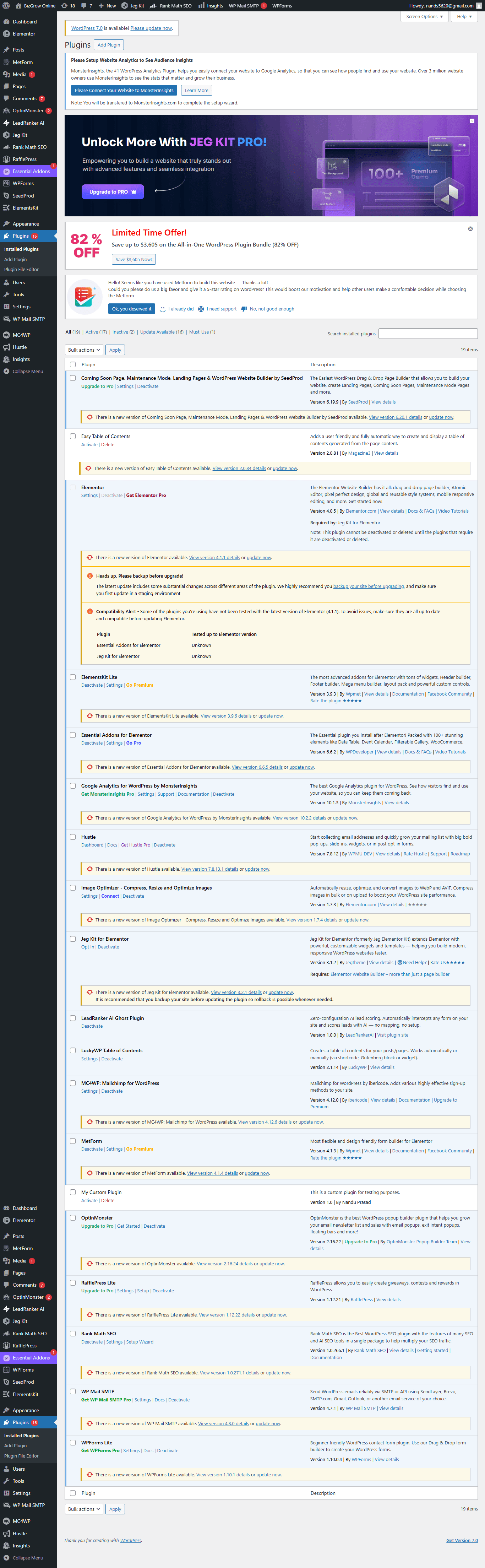
One of the biggest challenges was the growing number of plugins required to keep the site running.
My website relied on plugins for:
- SEO
- Forms
- SMTP email
- Page building
- Analytics
- Security
- Lead generation
While each plugin solved a problem, together they created additional maintenance overhead.
Constant Updates
Almost every week there were plugin updates, compatibility checks, and security patches.
Missing updates could potentially introduce vulnerabilities or compatibility issues.
For business owners who are already busy running their operations, this can become difficult to manage consistently.
Spam and Unwanted Traffic
Another issue I faced was spam comments and bot activity.
Moderating comments and protecting forms required additional plugins and manual effort.
Over time this became a recurring maintenance task.
Performance Challenges
Although WordPress can be optimized, achieving consistently high performance scores often requires additional plugins, caching configurations, and ongoing optimization.
My mobile performance score was significantly lower than I wanted.
Why I Chose Next.js
I rebuilt my website using Next.js because it offered:
- Better performance
- More control over SEO
- Reduced plugin dependency
- Improved developer experience
- Strong security practices
- Easier deployment workflows
The Result
After migrating, the website became easier to maintain and provided a much cleaner development workflow.
Instead of relying on multiple third-party plugins, most functionality is now built directly into the application.
Final Thoughts
WordPress is still a powerful platform and works well for many websites.
However, for my specific needs, Next.js provided greater flexibility, performance, and long-term maintainability.
The right choice depends on your goals, technical requirements, and maintenance capacity.
Found this useful?
I write about web development, SEO, and growing businesses online. Have a project in mind? Let's talk.